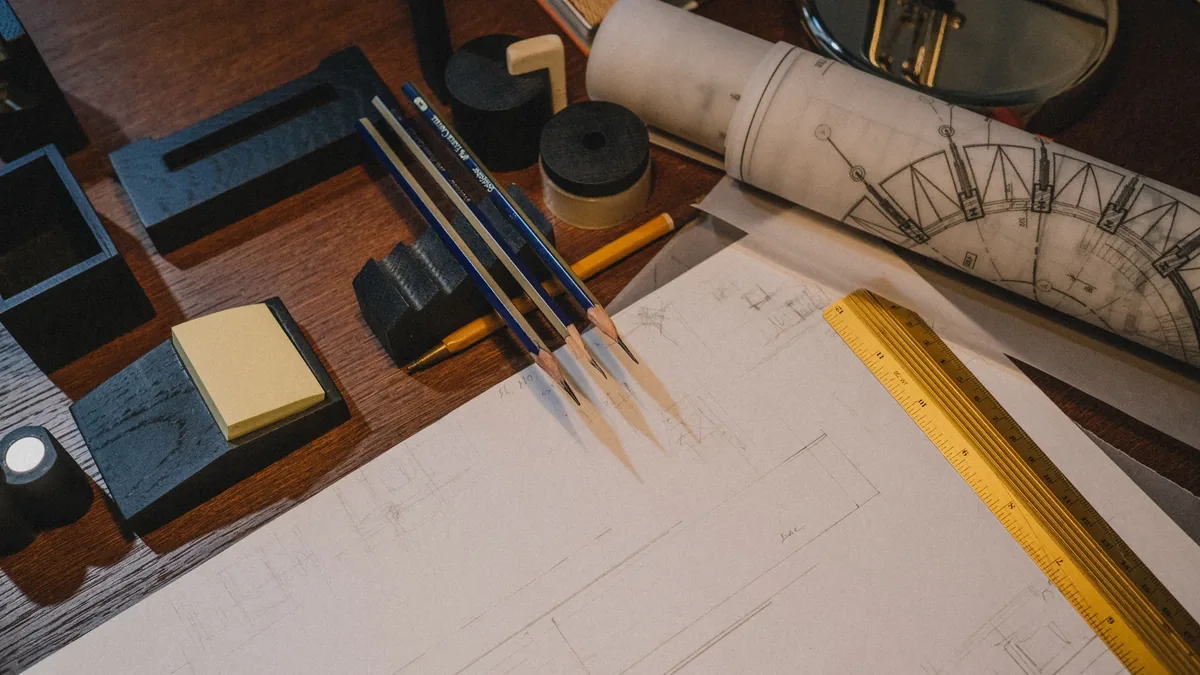
Desk
| Country of origin | Varies by specific design |
|---|---|
| First created | Ancient times (at least 3rd millennium BCE) |
| Original use | A surface for writing, reading, and task work |
| Primary material | Wood, metal, glass, or composite |
| Typical construction | Frame-and-panel, casegood, or trestle |
| Structural joinery | Mortise-and-tenon, dovetail, or metal fasteners |
| Standard height range | 28 to 30 inches (71 to 76 cm) for seated use |
| Common configurations | Rectangular, L-shaped, or adjustable (standing) |
Origin and history
The desk as a dedicated furniture form originated in medieval Europe, with its development becoming more pronounced from the 15th century onward. Its earliest predecessors were simple wooden boards placed on trestles, used primarily by scribes and scholars in monastic settings. The form evolved from the lectern, a slanted reading stand, into a flat surface designed for writing and document review. The 17th and 18th centuries saw the creation of more specialized desks like the secretary and the bureau, often featuring integrated storage. The Industrial Revolution of the 19th century enabled mass production, making desks commonplace in commercial and home offices. The 20th century introduced steel desks and later, modular systems, responding to changing administrative work and technology.
What it is for
A desk is a furniture piece designed to provide a stable, elevated surface for manual work, typically while seated. Its primary function is to support activities such as writing, reading, drawing, and operating computers or other equipment. It serves to organize necessary tools and materials within arm's reach, thereby improving efficiency and focus. The structure is engineered to bear the weight of these items and the user's applied force, such as leaning or writing pressure. Many desks incorporate secondary functions through integrated storage like drawers, shelves, or compartments for supplies and documents. The design fundamentally aims to create a dedicated, ergonomic station that separates work materials from the general environment.
Pros and cons
A primary advantage of a well-constructed desk is its provision of a permanent, organized workspace that can enhance productivity and mental focus. Desks with quality joinery and robust materials offer exceptional longevity, often lasting decades without failure. The common mistake is prioritizing aesthetic style over dimensional suitability, leading to poor ergonomics and user discomfort over time. Desks with complex mechanical elements, like folding mechanisms or weak sliding tracks, are frequent points of failure and regret. Users who require ample, unbroken surface area often regret choosing desks dominated by small, fixed compartments or excessive ornamentation. A significant con is that large, heavy desks are difficult to reposition and can permanently dictate a room's layout, which suits those who regret their choice.
Who it suits
A simple, solid-wood desk with durable joinery suits individuals who value longevity and a stable work surface over transient styling. Heavy, monumental desks suit users who work with physical media like drafting or crafting, where stability against force is critical. Minimalist desks with ample, clear surface area suit users of modern technology who require space for multiple monitors and peripheral devices. Desks with extensive, integrated filing and storage suit those who handle large volumes of physical paperwork and prefer containment. Adjustable-height desks suit individuals with specific ergonomic requirements or those who alternate between sitting and standing. Basic, utilitarian desks suit rental properties, temporary offices, or budget-conscious users where function and cost are primary concerns.