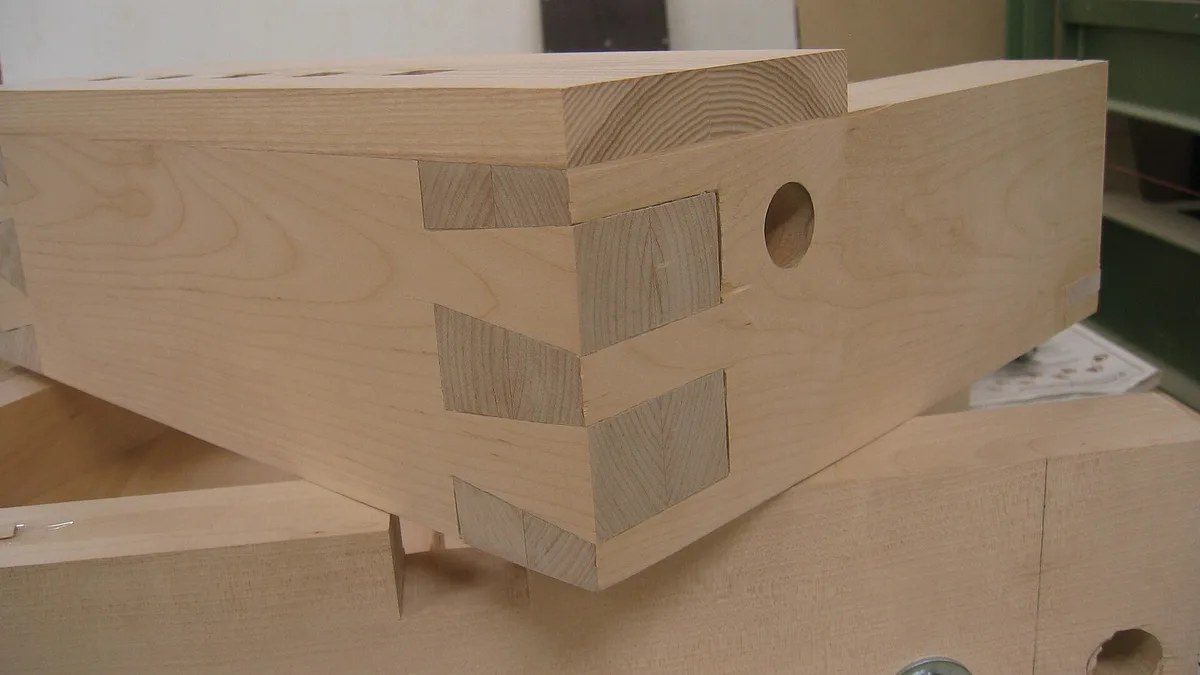
Dovetail Joint
| Construction method | Joinery |
|---|---|
| Original use | Structural woodworking |
| Strength | Very high (interlocking mechanical lock) |
| Common wood types | Hardwoods (e.g., oak, walnut, maple) |
| Common applications | Drawer fronts, carcass construction, tool chests |
| Visual hallmark | Flared, trapezoidal pins and tails |
Origin and history
The dovetail joint is an ancient woodworking technique with origins in ancient Egypt. Archaeological evidence from furniture entombed with pharaohs confirms its use as early as approximately 3000 BCE. The method subsequently appeared in ancient Chinese furniture, notably in burial chests from the Tang dynasty. Its use in European woodworking became widespread by the medieval period, particularly in joined chest and cabinet construction. The joint's fundamental geometry remained largely unchanged for millennia, refined primarily by hand-tool techniques. The industrial era saw the development of machine-cut dovetails, but the hand-cut version remained the benchmark for quality in fine cabinetmaking.
What it is for
The primary function of a dovetail joint is to mechanically lock two pieces of wood together at a right angle, most commonly in drawer construction and box assemblies. It is engineered to resist being pulled apart through its unique trapezoidal pin and tail shape, which provides immense tensile strength. This makes it exceptionally suitable for drawer fronts and sides, which endure constant pulling forces during use. The joint is also employed in carcass construction for cabinets and case pieces, where it provides robust corner joints without relying solely on glue. Its design inherently compensates for wood's natural expansion and contraction across the grain, reducing the risk of splitting. The interlocking structure also provides a large, long-grain surface area for glue, creating a durable and permanent bond.
Pros and cons
The principal advantage of the dovetail joint is its legendary mechanical strength and longevity, often outlasting the wood itself. It is a mark of quality craftsmanship, particularly when hand-cut, signaling investment in durable construction. A well-executed dovetail requires no mechanical fasteners, resulting in a clean appearance and uninterrupted wood surfaces. The major con is its time-consuming and skill-intensive nature, making it expensive to produce compared to simpler joints like butt joints reinforced with staples or dowels. A common mistake is cutting the pins and tails too shallow, which critically undermines the joint's resistance to pulling apart. Regret often comes from novices who attempt it with inadequate tools or practice, leading to gappy, weak joints that are functionally inferior to a well-made simpler alternative; it is also poorly suited for construction-grade softwoods, where the end grain of the pins can crush under stress.
Who it suits
This joint suits the patient woodworker or workshop dedicated to traditional hand-tool skills and time-honored joinery methods. It is ideal for fine furniture makers, conservators, and bespoke cabinet shops where the structural integrity and visible craftsmanship of a piece are paramount. It is well-matched to hardwoods like oak, maple, and walnut, which can hold the fine edges of the pins and tails without crumbling. The method suits projects where the joint itself is a design feature, often left exposed to demonstrate quality, such as on the front of a drawer side. It is less suited to high-volume, cost-sensitive production environments where speed and price outweigh longevity and artisan appeal. Ultimately, it is for those who prioritize enduring construction and are willing to invest the necessary time to master and execute it properly.
Latest Dovetail Joint news
Latest reporting
Versatile Finger-Joint Cabinet Project
A woodworker details the construction of a versatile finger-joint wall cabinet, built initially for tea storage but repurposed as a whiskey cabinet.
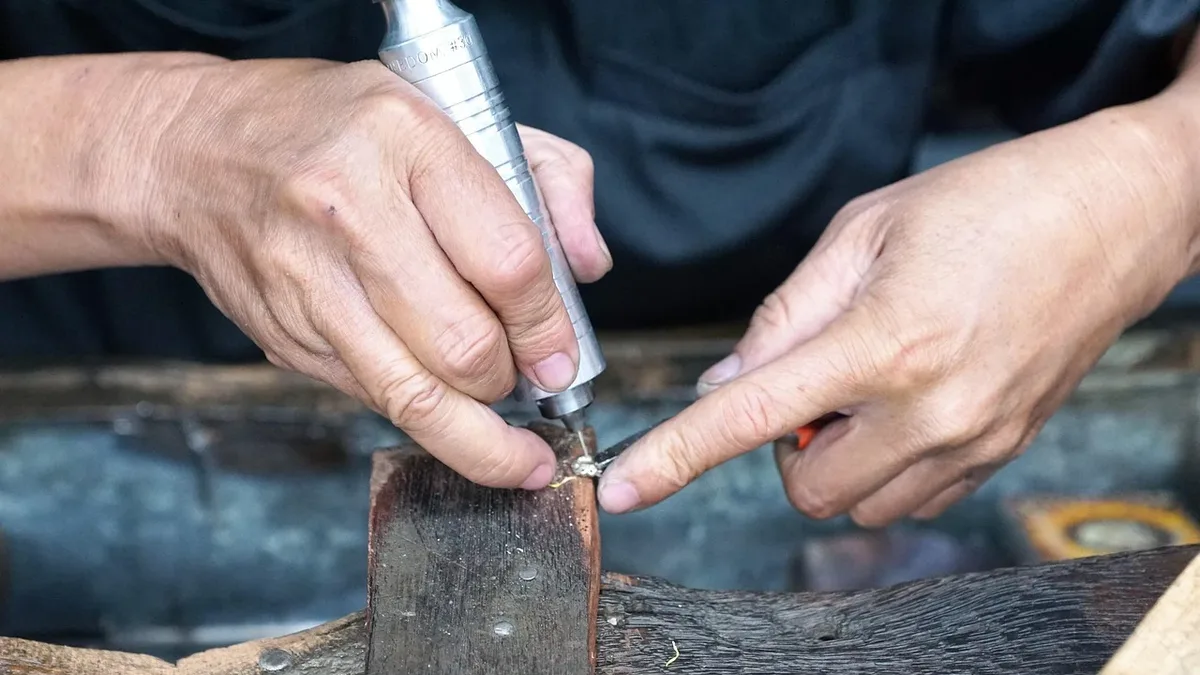
Rob Porcaro's Edge Joint Techniques
Woodworker Rob Porcaro details his hand-planing methods for creating perfect edge-to-edge joints.

Achieving Tight Mortise and Tenon Joints in Windsor Chairs
A guide to creating tight joints in Windsor chairs, with a focus on the mortise and tenon joint.
Sawdust Catcher Solves Dovetail Clamping Issues
A unique clamping block design addresses the challenges of clamping dovetail joints, particularly when they protrude.