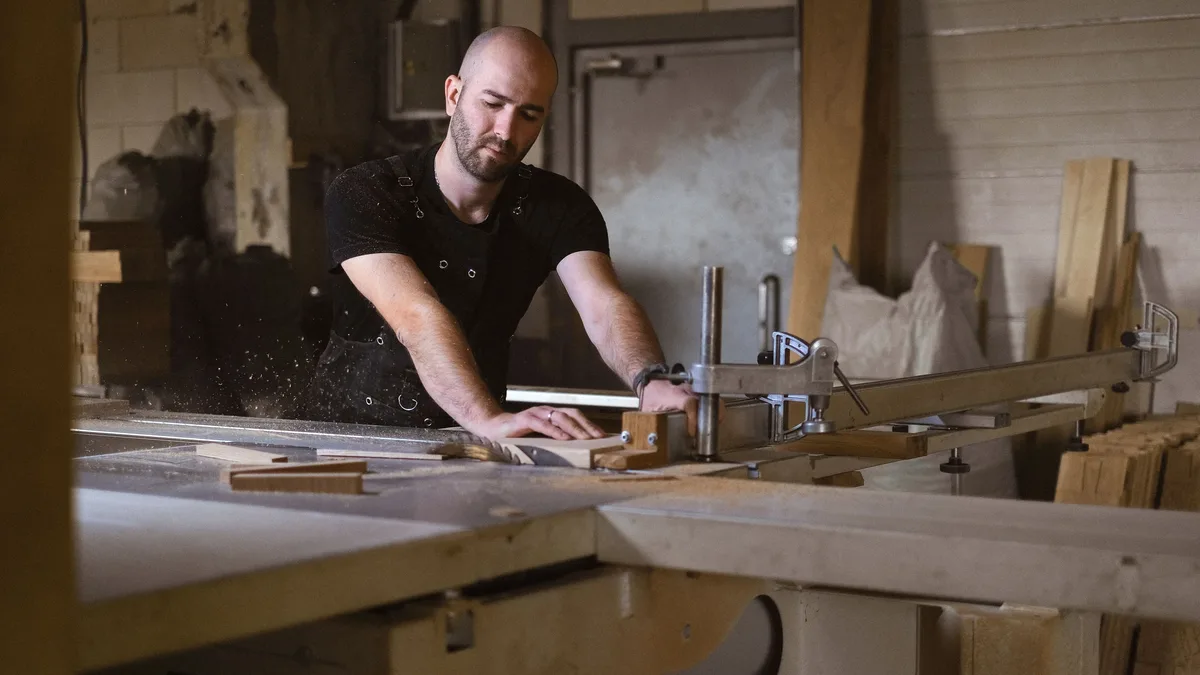
Belt Sander Demand Shifts as DIY and Customization Drive Growth
Professional woodworking leads global belt sander demand at 35%, with construction at 25% and DIY at 20%. The market is projected to grow steadily, reaching an index of 137 by 2035.

Professional woodworking and carpentry drive 35% of global belt sander demand. The construction sector follows at 25%, with the DIY and home improvement sector accounting for 20% of the market. The broader market is projected to expand at a compound annual growth rate of approximately 3.2% through 2035, reaching a market index of 137 by that year.
Metalworking and fabrication represent about 12% of demand. Other applications, including automotive, marine, and aerospace, account for the remaining 8%.
Regional market dynamics
Asia-Pacific dominates the global belt sander market, holding approximately 40% of demand. North America represents about 25% of global demand. Its mature market is characterized by high replacement demand and a strong DIY culture.
Latin America and the Middle East & Africa will offer niche opportunities. Growth there hinges on infrastructure investments and urbanization.
Key technological trends
Cordless and portable models are a major trend, driven by demand for on-site flexibility. The integration of brushless motors for enhanced durability and efficiency is also significant. Another key trend is the integration with dust extraction systems for cleaner work environments. This aligns with an increased focus on dust management and safety compliance.
The trend toward customization and high-quality finishes in woodworking will drive demand for advanced belt sanders. Key features include variable speed, dust extraction, and ergonomic designs.
Emerging applications and growth
Increased use of belt sanders in custom furniture and cabinetry is a major trend. Rising adoption in automotive repair and refinishing is also noted, as is increased use in marine and aerospace composite finishing.
The trend toward prefabrication and modular construction may reduce on-site sanding needs. It could, however, increase demand for precision finishing in factory settings.
The professional woodworking segment is expected to grow steadily. This growth is supported by rising construction spending in residential and commercial sectors in North America and Europe. The construction segment itself is cyclical and sensitive to economic conditions. Demand fluctuates with construction spending.
E-commerce will further penetrate the distribution landscape. This enhances price transparency and intensifies competition. Supply chain dynamics, including component availability and logistics costs, will remain a watchpoint. They could cause periodic disruptions. Price sensitivity is also driving adoption of mid-tier and private-label brands.
A veteran woodworking instructor with three decades of experience observes that students initially struggle with the physicality of hand-tool work. They often arrive at workbenches and sit down, which causes them to tire easily. Through immersive, full-body training in a weeklong class, students develop muscle tone, stamina, and high self-demand. They learn to position tools more accurately and confidently. The instructor emphasizes that woodworking with hand tools is dynamic and multidimensional, unlike more static machine-based work. Students internalize a policy of no phones and no sitting. One student, Leah, left with enough knowledge to continue woodworking using only her hands. The instructor studies the physicality of the craft daily, drawing hands to analyze muscle flex, compression, and the unique body language of hand-tool woodworking.