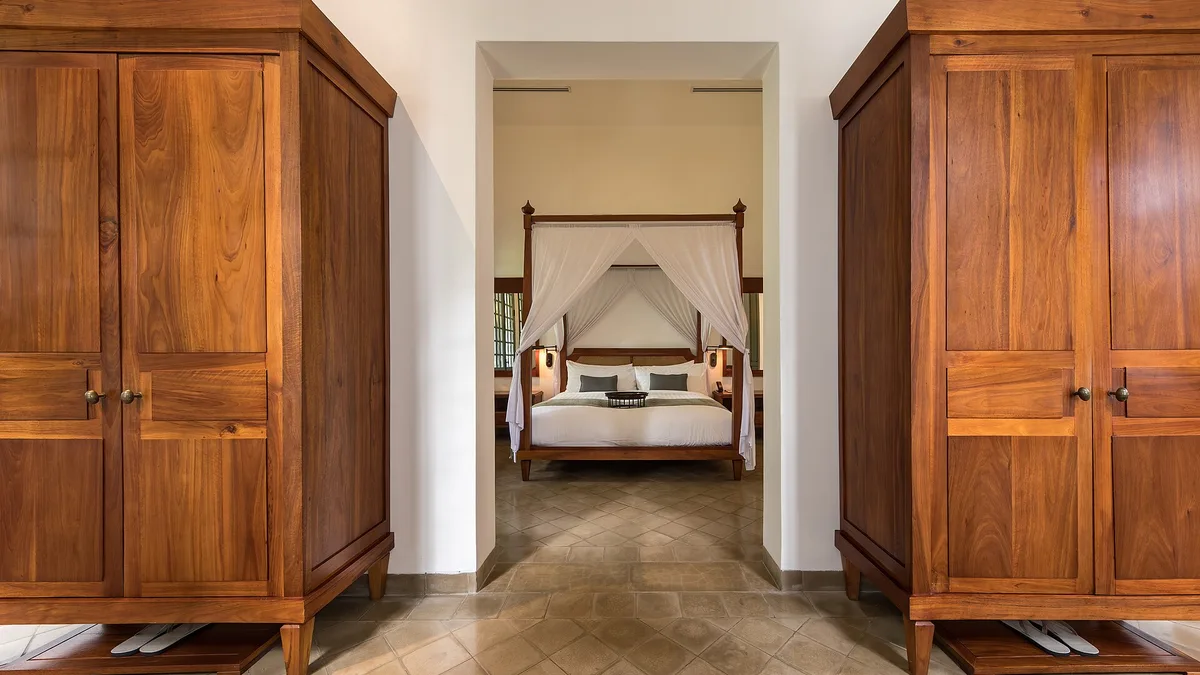
Wardrobe
| First created | 16th century |
|---|---|
| Original use | Storage of clothing and personal items |
| Typical construction | Casework (carcass) with doors |
| Primary materials | Wood, engineered wood, metal |
| Typical size | Large, freestanding |
| Typical joinery | Dado, mortise and tenon, dowel, butt joint with hardware |
Origin and history
The wardrobe as a dedicated storage piece for hanging garments originated in Northern Europe, with its development closely tied to the medieval era. Its direct predecessor was the large, freestanding oak chest, which evolved into a taller structure with doors and internal compartments during the late Middle Ages. The term itself derives from the Old French "garderobe," meaning a room or place where clothes are kept. By the 17th and 18th centuries, the wardrobe had become a standard piece of furniture in affluent European households, often ornately carved and reflecting prevailing architectural styles. The Industrial Revolution of the 19th century enabled more standardized production and wider distribution, making wardrobes more accessible. The form solidified into the familiar tall cabinet with a hanging rail and shelves, a design that has persisted with minimal fundamental change for over a century.
What it is for
A wardrobe is a tall, freestanding cabinet designed primarily for the storage of clothing and other personal items in a bedroom or dressing area. Its core function is to provide a contained space for garments to be hung on a rail, preventing wrinkles and keeping them organized and dust-free. Beyond hanging, it incorporates internal structures like shelves for folded items such as sweaters, linens, or hats, and may include drawers for smaller accessories like socks and undergarments. The doors, typically one or two, serve to conceal the contents, contributing to a tidier room aesthetic and protecting clothing from light exposure. Some designs feature specialized fittings for ties, belts, or shoes, adapting the storage to specific needs. Fundamentally, it consolidates diverse storage needs into a single, vertical footprint, optimizing bedroom floor space.
Pros and cons
A primary advantage of a freestanding wardrobe is its mobility and flexibility; it can be repositioned within a room or relocated entirely, unlike built-in closets. Its construction, when done with solid joinery, results in a durable, long-lasting piece that can withstand decades of use and moving. However, a significant drawback is its inherent spatial inefficiency, as it occupies full floor space and creates unusable dead space around its perimeter, particularly at the top and sides. Poorly constructed wardrobes, often relying on cam locks, staples, or thin particleboard, suffer from sagging shelves, wracking frames, and hinge failures, leading to a short functional lifespan. A common mistake is selecting a wardrobe based solely on exterior finish without inspecting the internal joinery, such as dovetails, mortise-and-tenon, or robust dado joints, which are critical for stability. Individuals often regret choosing large, cheaply made wardrobes that become cumbersome to move and fail structurally long before their aesthetic appeal wears off, representing poor value.
Who it suits
Freestanding wardrobes suit renters and those in temporary living situations, as they provide substantial storage without requiring permanent installation or modification to a rental property. They are ideal for individuals who value furniture as movable assets and may wish to reconfigure their bedroom layout periodically or take the piece to a future home. People living in older homes or buildings that lack built-in closets find wardrobes a necessary and practical solution for organized clothing storage. They also suit buyers who prioritize specific materials and traditional craftsmanship, seeking a heirloom-quality piece constructed with solid wood and proper joinery over disposable flat-pack options. Conversely, they are less suited for those in very small rooms where every inch of floor space is critical, as a wardrobe's footprint can feel imposing. They are a pragmatic choice for anyone needing immediate, substantial storage without the cost and commitment of a custom built-in closet system.