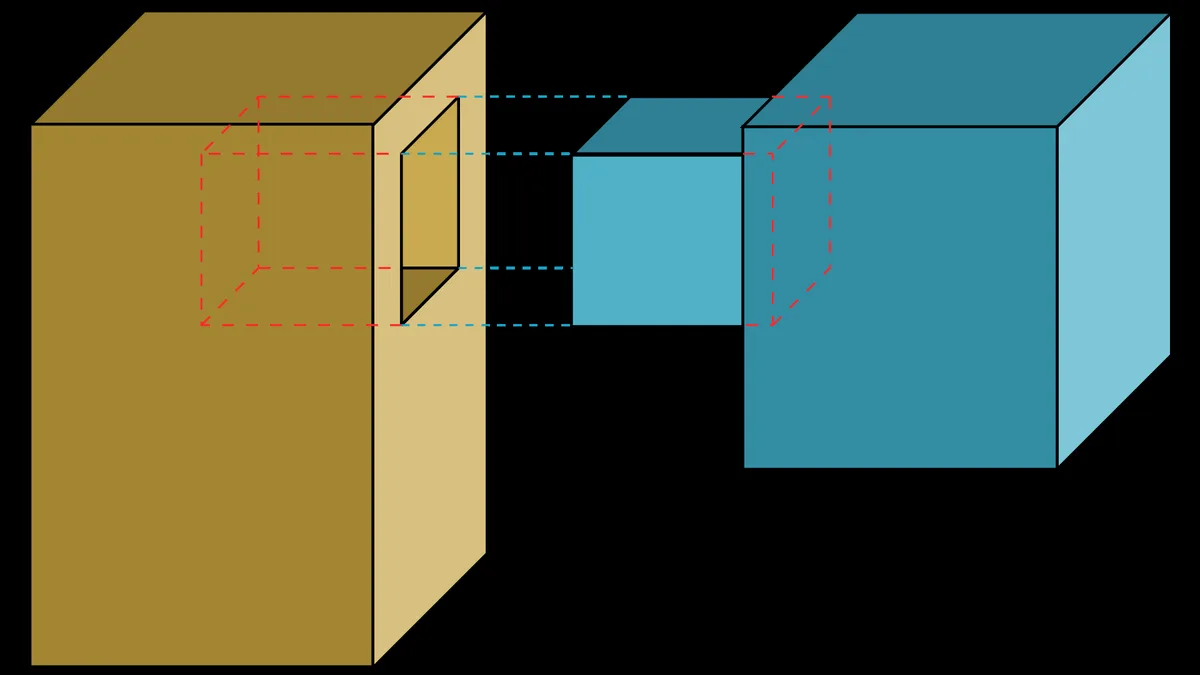
Mortise And Tenon
| Construction method | Mortise and tenon |
|---|---|
| Original use | Joining timber in woodworking and timber framing |
| Joint type | Interlocking |
| Typical materials | Wood, sometimes composite timber |
| Strength | High, especially when glued |
| Complexity | Ranges from simple to complex |
| Common applications | Furniture, doors, windows, timber frames |
| Key tools | Chisel, mallet, saw, router, mortising machine |
Origin and history
The mortise and tenon joint is one of the oldest known woodworking joinery methods, with its origins tracing back to ancient civilizations. Archaeological evidence confirms its use in ancient Egyptian furniture and architecture as early as the Bronze Age, over three thousand years ago. The joint was independently developed and refined in ancient China, where it formed the structural basis for monumental timber architecture without the use of nails. Its use was widespread across Europe, evident in Roman woodworking and later in the timber framing of medieval structures. The technique persisted as a fundamental principle in furniture making through the Renaissance and into the modern era. Its historical prevalence is a direct result of its inherent mechanical strength and logical transfer of force, which made it indispensable before modern fasteners.
What it is for
The mortise and tenon joint is designed to create a strong, rigid, and often invisible connection between two pieces of wood, typically at a right angle. Its primary function is to transfer load and resist twisting or racking forces within a frame, such as in chairs, tables, doors, and timber-framed buildings. The joint is engineered to handle both tensile and compressive stresses by using the long-grain glue surface of the tenon cheeks within the mortise. It is specifically intended for joining rails to stiles, legs to aprons, or any situation where a stable, permanent union is required. The design allows for considerable variation, including through-tenons, blind tenons, and wedged tenons, to suit different structural and aesthetic needs. Ultimately, it serves to create integrity in the piece itself, prioritizing the longevity and durability of the construction over superficial styling.
Pros and cons
It provides excellent resistance to racking and twisting forces, making it ideal for load-bearing furniture like chairs and workbenches. A significant pro is its ability to be entirely concealed for a clean appearance or expressed as a decorative element, offering versatility. The primary con is its time-consuming and skill-intensive nature, requiring precise layout, careful chopping, and accurate fitting that challenges novice woodworkers. Common mistakes include fitting the tenon too loosely, which creates a weak glue joint and immediate wobble, or fitting it too tightly, which can split the mortise member during assembly. Those who regret choosing this method are typically individuals working under time constraints or those without the necessary hand-tool skills or precise machinery, as a poorly executed mortise and tenon is weaker than a simple mechanical fastener. Furthermore, the joint can be difficult to disassemble for repairs without causing damage, unlike some knockdown hardware or simpler fastenings.
Who it suits
This joinery method suits traditionalist woodworkers and craftspeople who prioritize time-tested construction techniques and permanent, heirloom-quality furniture. It is ideal for those building pieces that will undergo significant stress, such as dining chairs, library ladders, or timber frames, where joint integrity is paramount. The method is well-suited to artisans with patience, a methodical approach, and proficiency with hand tools like chisels and saws, or access to precise machinery like a mortiser and tenon jig. It is less suited to production-oriented shops where speed is a primary concern or for projects intended to be easily disassembled and transported. Beginners can successfully use the joint but are advised to practice on scrap material extensively to understand the critical fit and alignment. Ultimately, mortise and tenon joinery suits any builder whose primary goal is the inherent strength and enduring quality of the piece itself, valuing construction over styling.
Latest Mortise And Tenon news
Latest reporting

Kreg Edge 20V Loose Tenon Joiner Launches
Kreg Tool has introduced the Edge, a cordless loose tenon joiner, as direct competition to the Festool Domino.

Achieving Tight Mortise and Tenon Joints in Windsor Chairs
A guide to creating tight joints in Windsor chairs, with a focus on the mortise and tenon joint.

Mindful Makeovers: A New Approach to Tenon Gaps
A furniture maker shares a surprising discovery when using cyanoacrylate glue to fill small gaps in tenons.