Peter Benson: Avoiding Carving Disasters
Carving expert Peter Benson shares practical steps to prevent common mishaps, from planning and support to repair strategies.
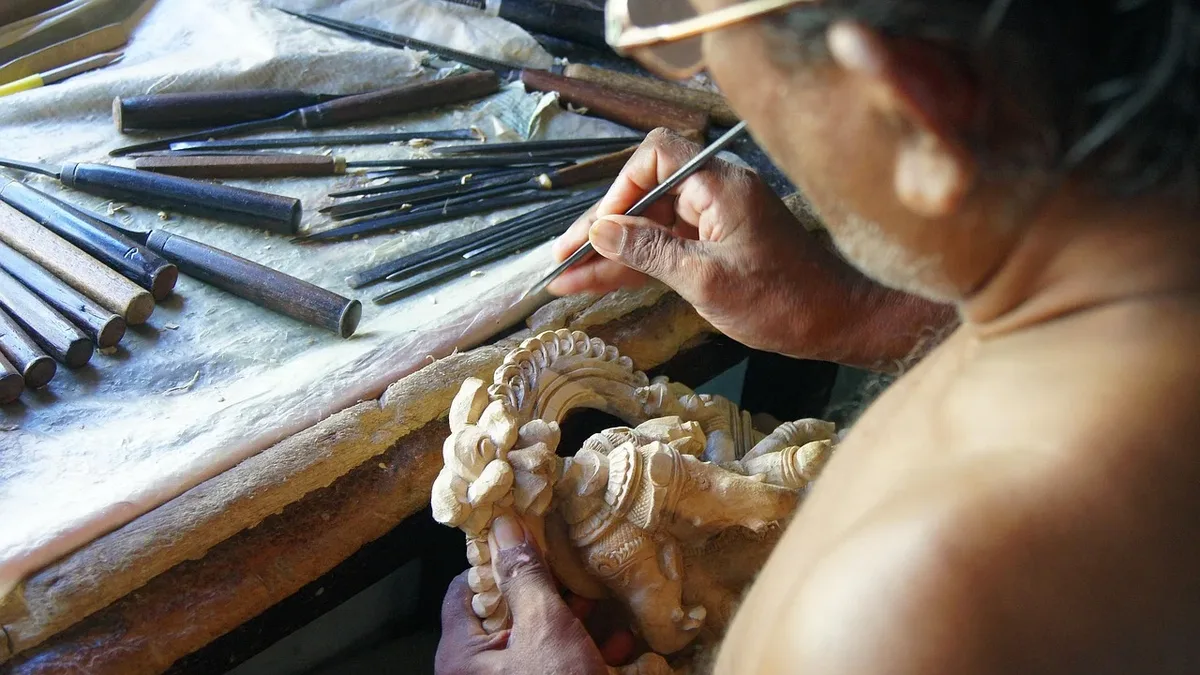
Peter Benson, a seasoned woodcarver, offers advice on avoiding unexpected problems in carving. He warns that Murphy’s law means that if anything can go wrong, it will.
Planning
Benson stresses that the first step is to confirm that the design is actually feasible. He cites an example where a carver was working on a figure of a girl looking into a mirror and only realised mid-process that the mirror was positioned directly in front of the face, making tool access impossible. A small design tweak during the planning stage could have saved the effort. Benson recommends creating a simple maquette before carving to spot such issues. He also advises checking vulnerable areas, such as long protrusions or fingers that might need to be shortened or repositioned. Grain direction can help; for example, aligning the grain along the length of a leg can reduce breakage. When copying another design, he cautions that models made from clay or resin may need adjustments to work in wood.
Supporting Vulnerable Areas
If a piece has many fragile parts, Benson suggests leaving temporary supports in place early on and reserving the most delicate details for the final stages. He notes that keeping a carving in a secure spot in the workshop, away from traffic, reduces accidental damage. In his own work, he kept the supporting wood on a dancer figure until the main body and head were nearly finished, removing it only after the top arm and outstretched arm were carved. He also points out that boxwood, being strong and forgiving, can handle multiple supporting elements without breaking.
Repairs
Even with precautions, mistakes happen. The most common errors involve hands, feet, and heads of human figures. If a figure is clothed, Benson says replacement limbs can be carved and fitted into clothing to hide the join. For nude figures, adding drapery or an arm band can conceal a repaired joint. Animal carvings face similar challenges unless there is fur or hair to mask the seam. He recommends using darker woods like walnut or mahogany when a natural finish is desired, as replacement pieces blend better. If the piece will be painted, any repairs can be hidden with filler and paint, though judges in competitions may still spot faults.
Final Observations
Benson’s final advice focuses on avoiding careless handling. He warns against unnecessary movement of the carving, which can lead to drops or contact with vulnerable areas. Secure clamping or a vice should allow access to all parts with minimal adjustment. He cautions that hard woods require significant pressure to remove material; a dull tool increases the risk of disaster. For more detailed guidance, see the stats on common carving errors and the squad of experienced carvers who share their techniques.
By planning carefully, supporting weak points, and knowing how to repair, a carver can reduce the impact of Murphy’s law and keep the creative process smoother and safer.