Actiu's Ondula Chair Brings Tailoring Curve to Wood
Actiu introduces its first wooden chair, Ondula, designed with estudi{H}ac. The piece draws inspiration from tailoring's armhole curve and is built for shared environments with stackable, movable design.
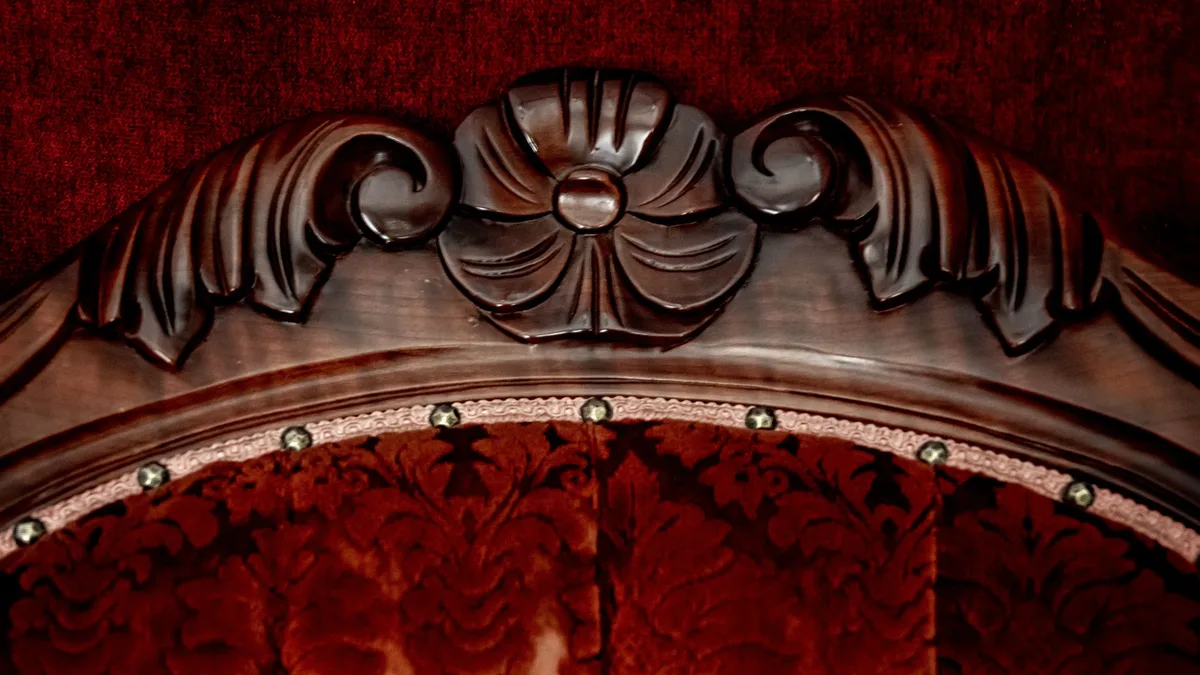
Actiu has launched Ondula, its first wooden chair. Designed in partnership with the studio estudi{H}ac, the chair expands the Spanish manufacturer's material palette to bring warmth and a tactile quality to contract and shared spaces.
The design is directly inspired by a fundamental element of tailoring. The curved line that defines a garment's armhole has been translated into the chair's form. This curve shapes the wooden backrest to embrace the body, creating a continuous transition between the chair's components. A metal arch wraps around the structure, acting as a visible reinforcement akin to a seam.
Soledat Berbegal, Actiu's Director of Brand Reputation, highlighted the construction challenge. "The greatest manufacturing challenge was achieving a precise connection between the curved wood and the steel tubing," she explained. Joining these materials with different behaviors required careful machining and rigorous quality control.
Designed for Shared Environments
The chair is built with practical demands in mind. Its backrest doubles as a handle for easy movement, and the design is stackable. These features suit offices, hotels, and restaurants where layouts need to change throughout the day.
Sustainability and Disassembly
Sustainability is a key focus. The wood used is FSC-certified and comes from controlled logging. Also, the Ondula chair can be completely disassembled into separate, single-material components. This design facilitates recycling at the end of the product's life cycle.
José Manuel Ferrero, founder of estudi{H}ac, elaborated on the tailoring analogy. "The armhole is a decisive curve: it allows a garment to adapt to the body and follow its movement," he said. Transferring this idea resulted in a backrest that embraces the user, with steel tubing running through like a visible seam.
Calculating Wood Movement for Furniture
In a separate guide, woodworker Dan Bollock details how to calculate wood movement to prevent furniture failure. Ignoring the natural expansion and contraction of wood across seasons can lead to splits and breaks, as he learned from a white oak stereo cabinet that cracked.
Wood is an anisotropic material, meaning its properties differ by direction. Movement along the length of a board is negligible for furniture makers. Substantial movement occurs in the tangential and radial directions, which must be accounted for in design.
Calculating this movement requires specific data. The process involves determining the wood's shrinkage coefficient from a resource like the USDA Forest Service's Wood Handbook and finding the local equilibrium moisture content (EMC) extremes. For a 36-inch wide dining table top made of flatsawn white oak, the tangential shrinkage value is 10.5 percent from green to oven-dry states.
The actual seasonal change in width depends on local humidity. Using Indianapolis in August as an example, the high EMC is 13.6 percent. For a winter indoor setting of 70°F and 30 percent relative humidity, the low EMC is 6.2 percent. Plugging these figures into the standard formula reveals the potential change in width.
| Calculation Component | Value for Example (White Oak Table) |
|---|---|
| Wood Species & Cut | Flatsawn White Oak |
| Tangential Shrinkage Coefficient | 10.5% |
| High EMC (Indianapolis, August) | 13.6% |
| Low EMC (70°F, 30% RH) | 6.2% |
| Starting Width | 36 inches |
| Calculated Width Change | 0.9324 inches |
The calculation shows a potential width change of nearly one inch. Furniture that does not accommodate this movement through proper joinery and construction techniques risks failure.