Build a Replica of an Arts and Crafts Classic: The Limbert Footstool
A step-by-step guide to creating a replica of a classic Arts and Crafts footstool, inspired by the Limbert Arts and Crafts Furniture company.
Twenty-five years ago, a chance encounter with an old oak stool sparked a lifelong fascination with its beauty and functionality. The stool, built over 100 years ago by the Limbert Arts and Crafts Furniture company of Michigan, has been used as a computer desk, kid seat, snack table, and stepladder, and remains as attractive, useful, and sturdy as the day it was made.
Cutlist and Diagrams
To build your own replica, you'll need the following materials:
| Material | Size |
|---|---|
| 4' board | 11-1/4" wide |
| 3' board | 2" wide |
| 2' board | 1-1/2" wide |
You'll also need to create a half-pattern for the legs and aprons, which can be enlarged and used as a template.
The Build
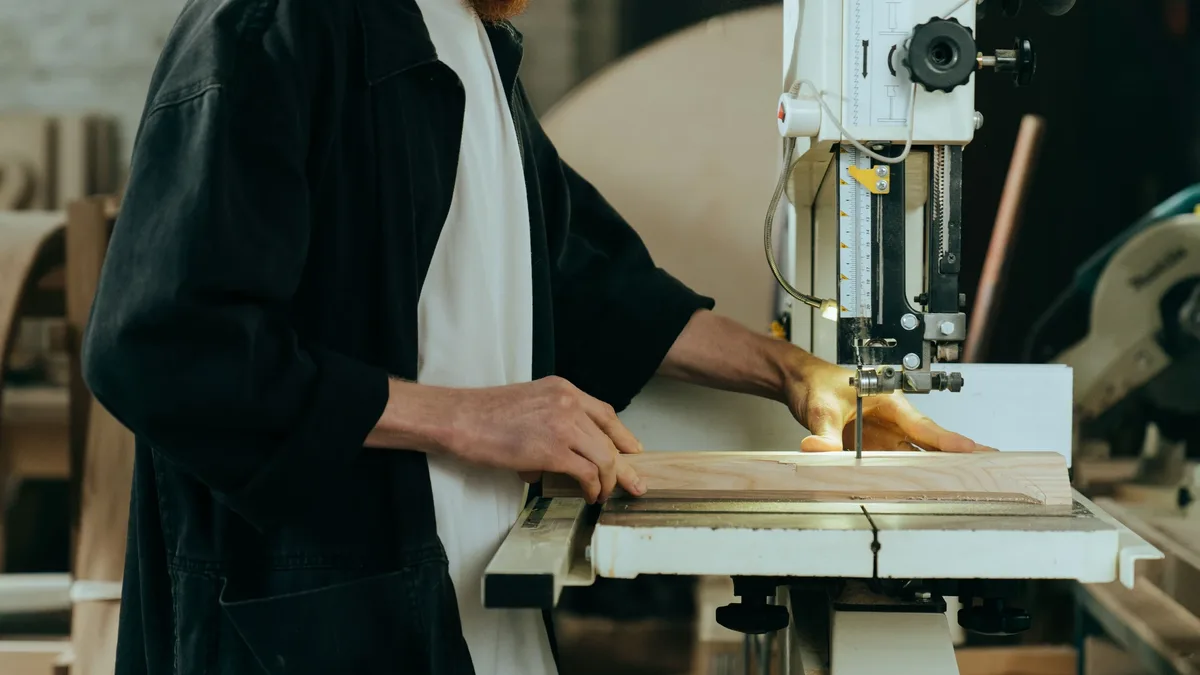
The build process begins with cutting the legs and top from the wide board. Both ends of each leg are cut at a 5° bevel, and the aprons are cut to final length from the 2" wide material. The leg cutouts are made using a 1-1/8" spade bit, and the outline of the apron is cut with a jigsaw or bandsaw. The sawn surfaces are then smoothed with sandpaper wrapped around a short length of dowel.
The next step is to glue and nail the aprons to the legs, ensuring that both legs lean at 5°. This is achieved by using a sliding bevel to check the angle, and pre-drilling holes before pounding in the nails. The second apron is then installed, and the top is cut to length.
The top is then drilled with holes for the ends of the cutout, and cut between the holes with a jigsaw. The corners of the top are rounded, and the leg assembly is centered on the top. Pilot holes are drilled for mounting screws, and the leg assembly is glued and screwed into place.
Finally, the stretcher is cut to length and positioned between the legs. The centers of the screw holes are located on the outside of the legs, and holes are drilled for decorative plugs. The stretcher is then glued and screwed into place, and the plugs are glued in.
The result is a sturdy and attractive footstool that is sure to become a beloved piece in any home. With its classic design and timeless beauty, it's a testament to the enduring legacy of the Limbert Arts and Crafts Furniture company.