Fine Woodworking details prewoven cane seat
A Fine Woodworking article explains the process of reviving an old chair by replacing its seat with prewoven cane, detailing the materials, tools, and
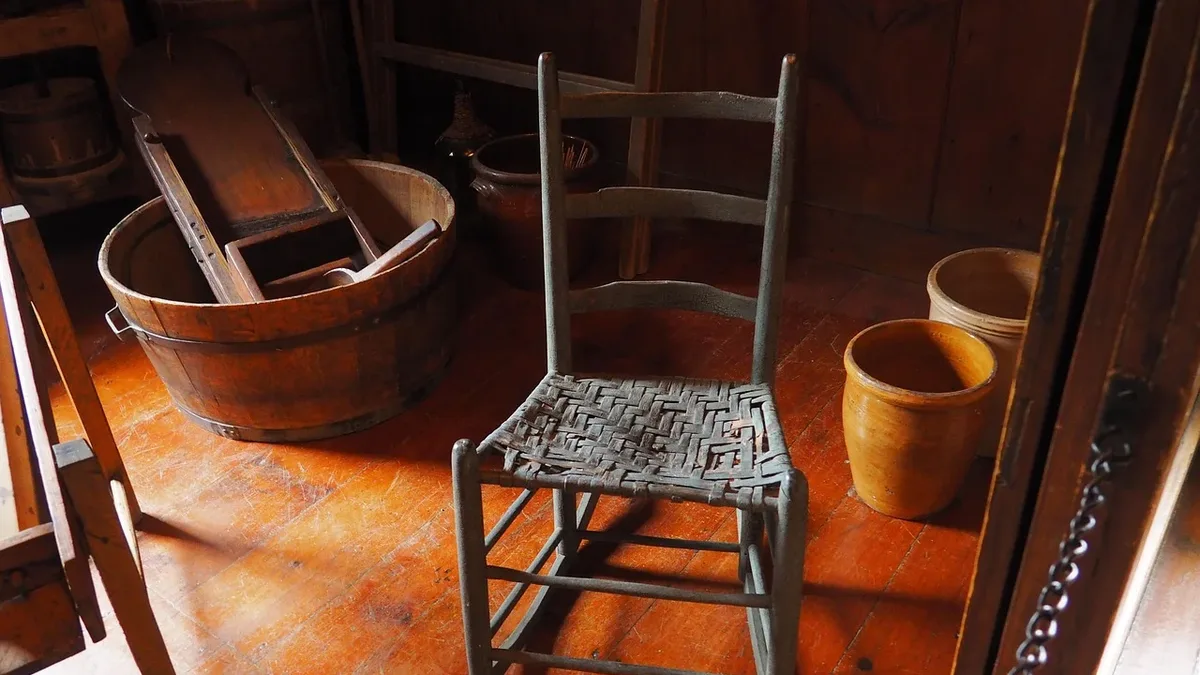
Replacing a cane seat is a straightforward process that can breathe new life into an old chair, according to a guide from Fine Woodworking. The article focuses on using prewoven cane, a sheet material that revolutionized chair-seat construction in the 1870s by making installation fast, simple, and inexpensive.
Cane is sliced from the hard outer skin of the rattan palm, a climbing vine native to Southeast Asia. Prewoven cane comes in various patterns and sizes and is sold by the square foot, while strips for hand-weaving are sold in bulk, often in hanks containing roughly 1,000 linear feet.
Preparing the cane and chair
Dry cane is brittle and can crack during installation, so it must be softened first. The source recommends creating a soaking solution of eight parts purified water to 1.5 parts alcohol to 0.5 parts glycerin. The cane panel should be trimmed to size, submerged in the solution, and allowed to soak for half an hour or until it stays flat when unrolled.
If replacing old cane, the spline holding it in place must be removed. The guide advises wetting the old spline with purified water to soften the glue, then using a razor knife to cut between the seat and the spline all the way around. Most of the old cane panel should be cut out to simplify spline removal. The groove in the chair frame must then be thoroughly cleaned using a tool like a 1/8-inch mortise chisel, taking care not to enlarge it.
Weave-it-yourself vs. prewoven cane
The author, who used to hand-weave cane chairs, states that a well-done hand-woven panel is a work of art but acknowledges it is a time-consuming skill that requires practice to master. Weaving a typical chair seat can take most of a day. In contrast, prewoven cane has the drama removed, offering predetermined results for sag and pattern uniformity and enabling quick installation.
Prewoven cane is available in several patterns, with the octagonal-hole, eight-strand weave being the most recognizable. It comes in various sizes and in both bleached and unbleached finishes. The sheet is held in place by a reed spline driven into a groove in the chair frame.
| Spline Size | Fits Groove Width |
|---|---|
| 6.5 | Specific width (not specified) |
| 9.5 | 1/4 inch |
| 12 | Specific width (not specified) |
The source notes that a size 9.5 spline is the most popular, as it fits a 1/4-inch-wide groove.
Installation process
Only a few tools are needed: wooden wedges, a small dead-blow hammer, and a razor knife with a fresh blade. The prewoven cane should be cut to a size a couple of inches larger than the project perimeter all around, making alignment easier and providing excess material for trimming. The softened cane panel is pressed into the cleaned groove.
Wooden wedges are used to hold the cane in place temporarily around the perimeter. Finally, the spline, which should also be softened, is driven into the groove with the hammer to lock the cane securely in place. The article is based on the author's experience restoring a chair from a set their grandparents purchased in the early 20th century, a piece that has endured the Great Depression, World War II, and shifting design tastes.