Mystic Seaport's L.A. Dunton Reveals Its Joinery
A historic schooner's restoration exposes its detailed wooden framing, while a toolmaker advises on selecting the most versatile Western-style backsaw.

Two distinct stories highlight the importance of construction and joinery in woodworking. The first details the revealing structural work on a historic sailing vessel, and the second offers expert guidance on choosing a foundational hand tool for furniture making.
Historic Schooner's Structural Restoration
The restoration of the Grand Banks schooner L.A. Dunton at Mystic Seaport has laid bare its internal wooden framework. The vessel, one of only three of its type remaining, was placed in drydock in 2022 for a full rebuild expected to take another five or six years.
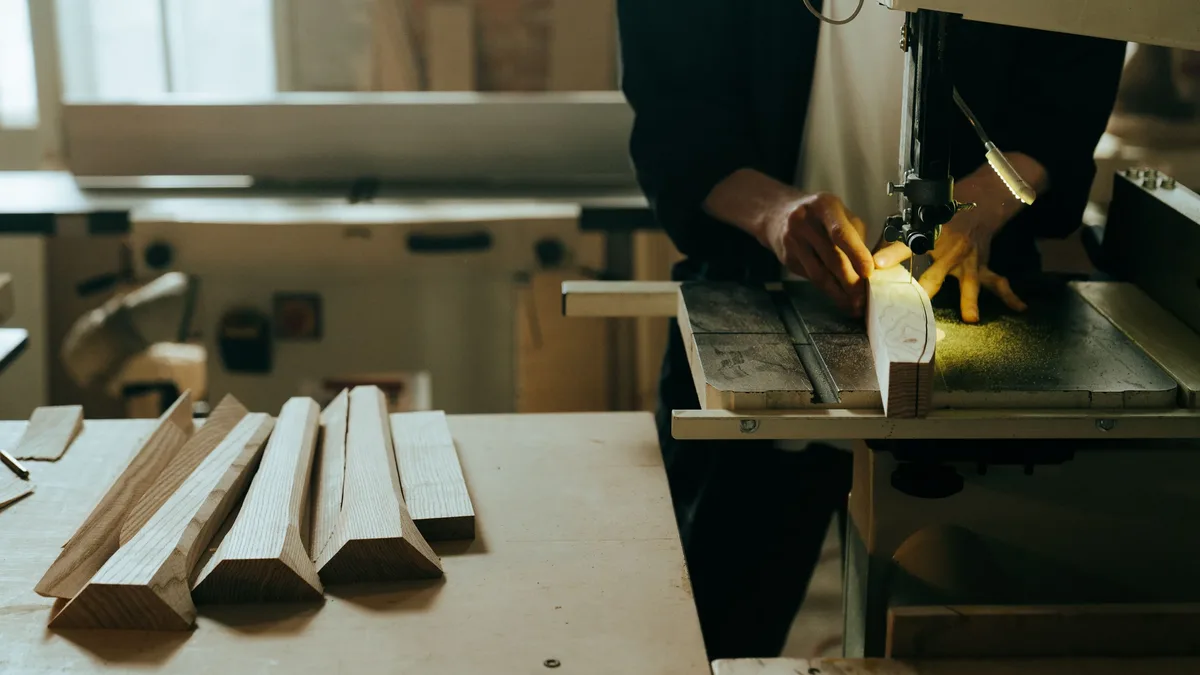
With the captain's cabin and crew quarters removed, the structural ribs, or futtocks, became visible. Many of the original ribs were in poor condition, some nearly rotted away. Their replacement pieces are being carefully fashioned from white oak, each shaped to reproduce the complex curves of the original hull framing. This painstaking work extends to the replacement hull planking.
The project's goal is to return the century-old schooner to sailing condition. There is talk of it potentially sailing New England waters again as a traveling ambassador for the seaport. While future visitors may admire the restored vessel, they will not have witnessed its detailed joinery from the inside out as the restoration has allowed.
Selecting a Foundational Backsaw
Toolmaker Mark Harrell, founder and former owner of Bad Axe Tool Works, advises against starting a hand tool collection with a dedicated dovetail saw. He argues that a carcase saw is a more versatile and practical first choice for most woodworkers, staying on his bench for about 75% of his cutting tasks.
Harrell recommends a Western-style backsaw, which cuts on the push stroke and is easier for users to sharpen and maintain for life compared to Japanese-style pull saws. After acquiring a carcase saw, he suggests adding a tenon saw, and only then the specialized dovetail saw that many beginners mistakenly purchase first. He now runs a part-time business repairing vintage saws and teaching maintenance seminars.
For a carcase saw, Harrell specifies looking for a 14-inch-long saw with a blade thickness between 0.018 and 0.020 inches and 13 or 14 teeth per inch, filed in a hybrid pattern for both ripping and crosscutting. This single tool can handle a wide range of tasks from basic crosscuts and miters to cutting various joints like dovetails, tenons, rabbets, and dadoes. Its size makes it capable for larger cuts while remaining refined enough for precise joinery work.