A-nrd's Bespoke Furniture for Arthouse Glasgow
A London design studio outfits a Glasgow hotel with custom furniture, while a woodworker details a clever bandsaw box mechanism.
Two distinct stories highlight craftsmanship in furniture from different angles. The first details a hotel interior filled with custom pieces, and the second provides a woodworker's guide to building a mechanical box.
Bespoke Hotel Furniture
A-nrd, a London interior architecture studio, has completed new suite and compact Pocket rooms for the Arthouse Glasgow hotel. The studio, led by Alessio Nardi and Lukas Persakovas, filled the spaces with custom-designed furniture that responds to the building's original 19th-century Victorian architecture. Much of the furniture is bespoke, designed to blend contemporary comfort with historic character.
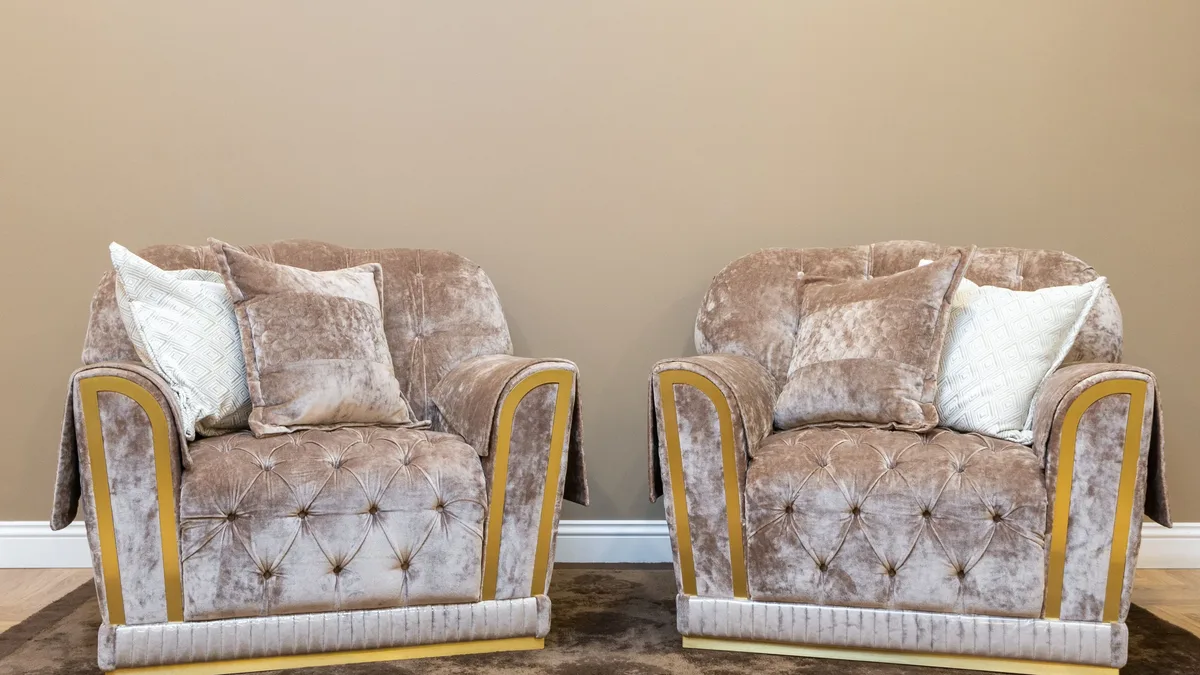
The suite features extensive restored dark timber wall panelling and an original fireplace with deep blue glazed tiles. A-nrd used this blue hue as a starting point for its custom furniture. The studio designed two low-level curved sofas with brushed stainless-steel bases, upholstered in a textured blue fabric. A bespoke king-size platform bed in the sleeping area is finished with a deep blue stain that allows the oak grain to show. Integrated bedside tables with circular waxed zinc tops form part of the same bed composition.
For the smaller Pocket rooms, the studio adapted its approach to a compact footprint. The bespoke beds are conceived as fully fitted units, with dark stained timber wrapping around to form an integrated desk. This creates a cocooning effect within the small interior. A sculptural, rounded chair upholstered in an olive-green bouclé fabric accompanies the desk. Throughout all rooms, custom articulated wall lights with handblown amber yellow glass shades were designed in collaboration with Glasgow artist Vicky Higgins.
Bandsaw Box Mechanism
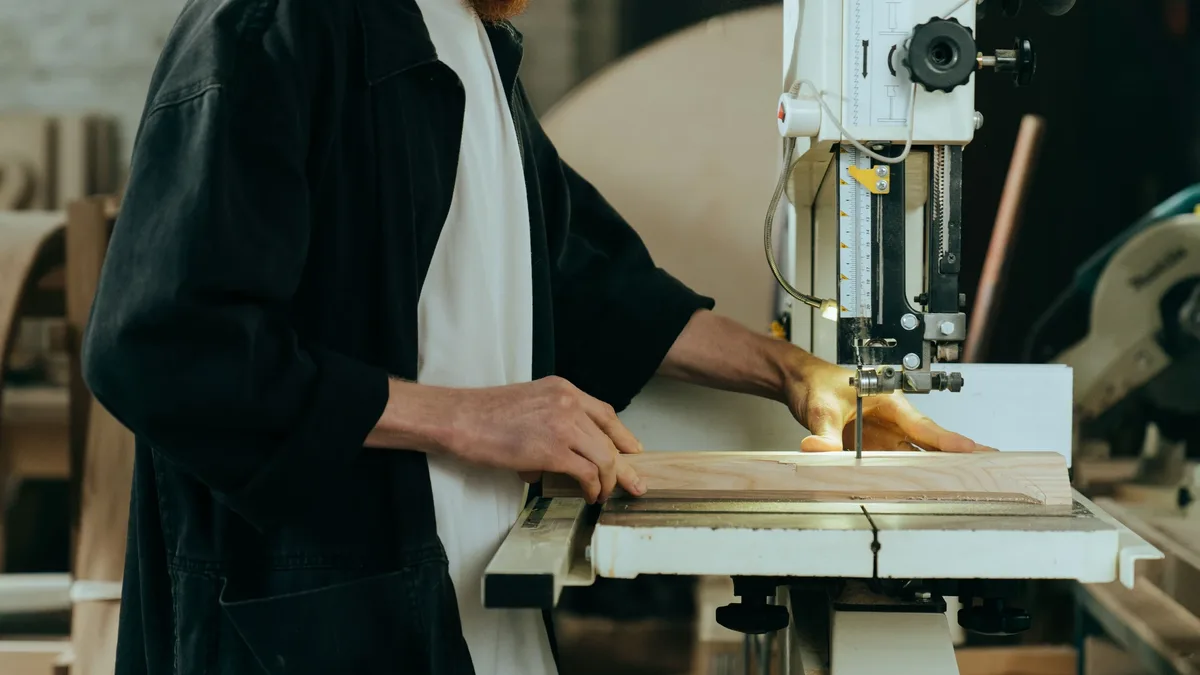
Woodworker David Luckensmeyer has demonstrated a bandsaw box with a push-button mechanism that pops out the drawers. He has been demonstrating bandsaw techniques for about 35 years and developed this box design a few years ago. The mechanism relies on a simple T-shaped mending plate hidden inside the back of the box.
Pushing the bottom drawer, which acts as the button, causes the T-plate to pivot and push out the drawers above. Pushing the drawers back in returns the mechanism to its starting position. Luckensmeyer emphasizes safety and proper bandsaw setup, noting that hands should never be in front of the blade's teeth. He recommends using sharp blades and cutting at a slow, steady pace.
The construction process involves a laminated blank and specific cutting sequences. The required materials and blades for the project are detailed in the following table.
| Component | Specification |
|---|---|
| Blank Thickness | 5-5/8 inches |
| Blank Width | 5 inches |
| Blank Length | 6 inches |
| Primary Wood Layers | Three layers of 1-3/4 inch thick wood |
| Secondary Wood Layers | Two layers of 3/16 inch thick wood |
| Wood Types Used | Cherry and Walnut |
| Blade for Outside Cuts | 3/16 inch, 10 TPI blade |
| Blade for Removing Back | 1/2 inch, 4 TPI blade |
| Blade for Secret Drawer | 1/8 inch, 14 TPI blade |
Luckensmeyer provides a step-by-step guide starting with gluing a paper pattern to the blank. Key steps include cutting the outside edge of the box, removing the back panel, cutting out the push button, and then carefully cutting the interior drawer partitions. The left and right drawers are assembled from cut blocks, while the middle drawer contains a hidden secret compartment accessed with the finest blade.