Ulster Carpets Executive Critiques Packaging, Praises Fabric
A furniture industry voice calls for accessible food packaging redesign and celebrates a historic textile pattern.
Two distinct perspectives on craft and material emerge this week. Kate Mitchell of Ulster Carpets highlights design flaws in everyday packaging and praises a classic furnishing fabric. Separately, a woodworker shares a discovery of furniture built from repurposed wine barrel staves.
Packaging Accessibility Critique
Kate Mitchell, Head of Contract Sales UK at Ulster Carpets, argues that common food packaging is poorly designed for accessibility. She identifies specific problematic items, including plastic milk bottles with fragile pull-tabs, large bottles with weak handles, tin cans with difficult ring pulls, and frustrating plastic trays for sliced foods.
Mitchell states the designs fail people with arthritis, disabilities, or reduced strength, often forcing them to use dangerous tools to open containers. She places responsibility on supermarkets to improve both accessibility and reduce plastic use, criticizing excessive packaging like individual plastic sachets within a larger plastic pack. While acknowledging the convenience of supermarkets, she suggests buying from local vendors offers more control over packaging. Her critique is rooted in principles of universal design and sustainability.
Historic Furnishing Fabric
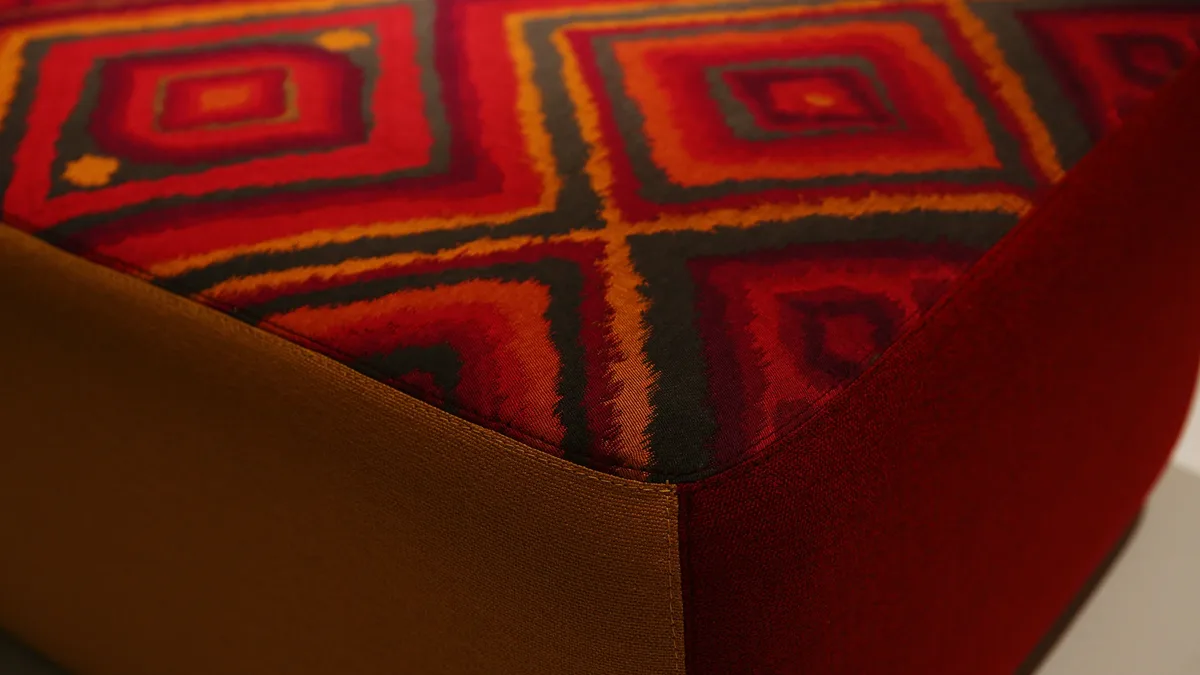
Mitchell selects the furnishing fabric Raimoult by Scottish designer Robert Stewart as an example of design perfection. Created for Liberty in the mid-1950s, the pattern introduced bold geometric shapes, abstract symbols, and vibrant colors into post-war homes.
She admires the confidence of the design, which provided a modern alternative to traditional florals. Mitchell's appreciation is partly nostalgic, as Stewart was head of the Printed Textiles Department at Glasgow School of Art, which she attended. She notes Stewart's significant contribution to British design across textiles, tapestries, and ceramics, bringing playful imagery and strong color contrasts into everyday living spaces.
Barrel Stave Furniture Discovery
A woodworker encountered Adirondack chairs constructed from disassembled wine barrel staves at a craft show booth operated by WBL Creations of Nescopeck, Pennsylvania. The discovery was novel to the observer, who noted the furniture's clever use of the staves' natural curves.
The barrel staves form the seat, back, and armrests, creating a shape reminiscent of a Morris chair. The maker left visible the staves' characteristic head grooves, rivet holes, and iron hoop stains, incorporating the barrel's history into the aesthetic. The front bung stave appears purpose-fitted, and the quartersawn figure of the wood adds to the visual appeal.
While repurposing whole barrels is common, using individual staves for furniture like Adirondack chairs is less so. The woodworker reflected that such discoveries highlight the value of encountering older woodworking ideas anew, even if the concept itself is not entirely new.